
AMPS PriceDynamix is the medical claims repricing solution designed to help health plans, TPAs, and self-funded employers regain control of out-of-network claims and independent dispute resolution (IDR) outcomes.
The numbers are no longer surprising. They’re just expensive.
According to the Departments of Labor, Treasury and Health and Human Services, Providers win 88% of Independent Dispute Resolution cases under the No Surprises Act. When they do win, analyses of CMS data show median awards averaging roughly 450% of comparable in-network rates. In the first three years of the IDR program, excess costs to the healthcare system exceeded $5 billion. Administrative fees alone hit $844 million in the first half of 2025, nearly matching every dollar spent on IDR administration from 2022 through 2024 combined.
For health plan CFOs and CEO’s, those figures represent real, trackable budget exposure, not a market-level abstraction. Every arbitration loss is a payment your payer organization made above a defensible in-network rate, a dollar that inflates medical loss ratio, pressures premiums, and compounds quietly across a full book of NSA claims.
Most health plans know this. What fewer have acted on is the harder question underneath it: if arbitration is this expensive and this difficult to win, why is so much strategy still focused on what happens after a case is filed?
AMPS is redefining what’s possible under the No Surprises Act for health plans, TPAs, and the brokers and consultants who advise self-funded employers, resolving disputes before arbitration through a negotiation-first approach that most organizations never attempt.
When Congress designed the No Surprises Act, federal officials projected roughly 17,000 IDR disputes per year. Through the end of 2025, the actual number was 4.8 million, nearly 280 times the original estimate. In the first half of 2025 alone, dispute submissions more than doubled the same period in 2024.
For regional and mid-size health plans, that trajectory is not a background concern. Many payer organizations are not built to absorb this volume, and the administrative infrastructure required to manage it at scale is growing faster than most plans anticipated when NSA took effect.
This is not a compliance problem that better processes will solve over time. The trajectory is moving in the wrong direction. Provider organizations with sophisticated legal and arbitration infrastructure have learned how to use the IDR system to their advantage. For many, filing for IDR isn’t a last resort. It’s a business model.
The response from most health plans has been to invest in dispute management: tracking systems, legal support, and arbitration preparation. That investment makes sense if you believe the fight happens at the arbitration table. The data suggests it mostly doesn’t. The fight happens earlier, in the 30 days before the arbitration table ever appears.
The No Surprises Act requires a 30-day open negotiation period before either party can file for IDR. This wasn’t a procedural formality. Congress designed it as the primary dispute resolution mechanism, the place where most disagreements would be settled without ever reaching arbitration.
It isn’t working that way, and health plans are bearing most of the cost.
Providers with high-volume IDR practices have learned that bypassing meaningful negotiation and filing straight to arbitration produces better outcomes for them. When arbitrators have historically awarded 450% of in-network rates to prevailing providers, the incentive to negotiate in good faith is limited. The 30-day window expires. The IDR filing goes in. The health plan is now playing defense on someone else’s timeline, absorbing filing fees, arbitration costs, and the compounding financial impact of probable losses.
This is where most payers lose ground, not at the arbitration table, but in the 30 days before it.
The question isn’t whether the open negotiation window exists. It’s whether anyone is actually using it.
Here’s what passive looks like: the dispute is logged, standard communications go out, the clock runs. Thirty days later, an IDR case is filed. The plan’s team begins arbitration prep.
Here’s what active looks like: the moment a dispute surfaces, an experienced negotiator engages the provider directly. Not through a portal. Not through automated correspondence. A real conversation aimed at reaching a number both parties can accept, before the window closes and the case becomes a filing.
The operational difference is significant. The outcome difference is dramatic. Owning the dispute process and winning disputes are not the same thing. A vendor can efficiently manage thousands of IDR filings while still producing an 88% provider win rate. The process runs smoothly. The losses accumulate quietly.
PriceDynamix, the medical claims repricing solution of AMPS, sits at the intersection of strategic claim and network repricing, provider negotiations, legal expertise, and payment integrity. That vantage point provides a unique perspective into how NSA disputes evolve, where opportunities are often missed, and what consistently produces stronger financial outcomes.
Rather than building our approach around compliance alone, AMPS invested early in an integrated strategy that combines strategic pricing methodologies, experienced legal professionals, dedicated negotiators, and operational expertise, each discipline strengthening the next to protect plan dollars while keeping the flexibility to evaluate every claim on its own merits.
When a provider disputes a payment, your plan’s position in that moment was set long before the dispute was filed. A payment methodology that is clearly documented, consistently applied, and built to hold up under scrutiny gives a negotiator something real to stand on. One that can’t be explained or defended gives the provider exactly the leverage they need.
This is where most payers are already behind before a single conversation happens. The dispute surfaces and the first question, ‘why did we pay this amount?’, doesn’t have a clean answer. AMPS builds that answer in from the start, so your plan enters every open negotiation from a position of defensible strength, not reactive explanation.
The minute a dispute comes in, AMPS negotiators engage directly, personally, and with the goal of resolution before the 30-day window closes. Not a portal response. Not an automated workflow. Outreach from an experienced professional who understands both the legal framework of NSA and the realities of provider negotiations.
Providers who file disputes at volume know exactly what a passive response looks like. They’ve seen it thousands of times. The clock runs, nothing meaningful happens, and the IDR filing goes in on day 31. When AMPS is working a dispute during that window, the conversation is different. The plan’s pricing position is defensible and explainable. The negotiator is engaged, informed, and focused on resolution. Providers who expected a passive response get an active one, and a significant portion of disputes that would have become IDR filings don’t.
Fewer filings. Lower administrative costs. Fewer arbitration losses. Compounded across a full book of NSA claims, the financial difference for a health plan is not incremental. It’s structural.
Providers winning 88% of IDR disputes is not an immutable law of the healthcare market. It’s the result of most vendors treating the open negotiation window as a formality and most health plans not yet asking the question that would change it.
AMPS was built on a different model: defensible pricing before the dispute is filed, active negotiation the moment one surfaces, and a relentless focus on resolution before arbitration is ever triggered. The payers we work with see dramatically fewer cases reach IDR, not because we’re better at arbitration prep, but because fewer disputes are getting there.
That outcome isn’t reserved for the largest health plans with the most resources. It’s a function of having the right partner, one that brings both the pricing discipline and the negotiation expertise to make the 30-day window actually work for your plan.
The math on IDR is not fixed. For health plans ready to stop absorbing arbitration losses and start protecting plan dollars at the source, it’s a choice.





Compliance alone does not create value. Learn why strategy, negotiation, and expertise are driving stronger NSA and IDR outcomes.
READ MORE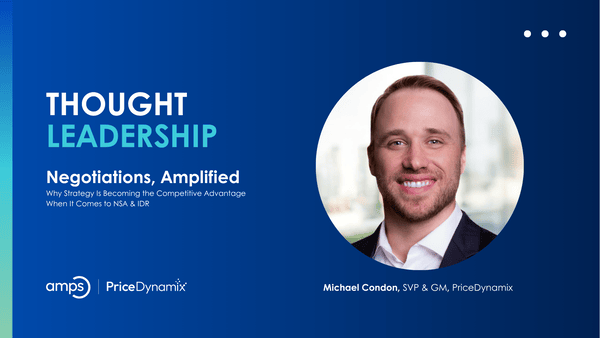
Compliance alone does not create value. Learn why strategy, negotiation, and expertise are driving stronger NSA and IDR outcomes.
READ MORE
80% of hospital bills contain errors. AMPS ClaimInsight's physician-led HDR delivers defensible, realized savings.
READ MORE


